
Blue Monday

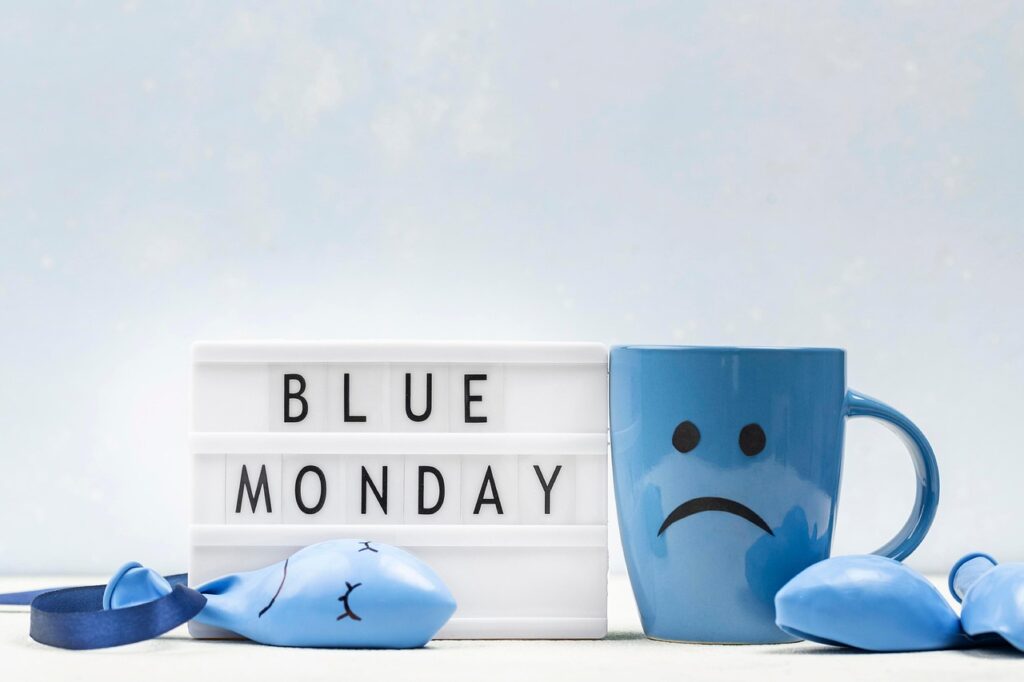
Every year, in late January, the UK — and much of the northern hemisphere — experiences a phenomenon popularly known as Blue Monday. Allegedly the most depressing day of the year, it falls on the third Monday of January and has become a cultural touchpoint, often referenced in media, advertising, and social conversation.
The term Blue Monday was coined in 2005 by a British psychologist who claimed to have used a formula considering weather, debt, time since Christmas, and motivation levels. While the scientific validity of the formula is highly contested, the concept has taken root in public consciousness. Every January, discussions of low mood, sluggishness, and lack of energy dominate social media and the press.
Despite its pseudo-scientific beginnings, Blue Monday has become part of British popular culture. Cafés, workplaces, and even shops use the day as an excuse to promote comforting rituals: a warming cup of tea, cosy blankets, or small treats. Many use the day as a reminder to check in on friends and colleagues, highlighting the social dimension of well-being.
Blue Monday reflects a combination of seasonal affective tendencies, post-holiday letdowns, and cold, gloomy weather. Shorter daylight hours and persistent rain can exacerbate feelings of fatigue and low mood. Psychologists caution that while the idea of Blue Monday can be entertaining, it should not replace genuine mental health support for those experiencing depression or anxiety.
Britons have long embraced subtle strategies to combat winter blues. These include routines like comforting rituals — a hot drink, a favourite book, or a brisk walk — all designed to bring small moments of pleasure and distraction. The day also encourages reflection on resilience, as people acknowledge the challenging aspects of the season while finding ways to maintain equilibrium.
While some dismiss Blue Monday as a marketing gimmick, its persistence in British culture is telling. It illustrates the interplay between societal narratives, weather, and collective mood. Moreover, it reflects a uniquely British attitude: a tendency to acknowledge gloom with understated humour, shared rituals, and small comforts, rather than dramatic displays of emotion.
Vocabulary
allegedly (adverb) – supposedly; claimed to be true but not proven
coined (verb) – invented or created (especially a word or phrase)
sluggishness (noun) – lack of energy or alertness
tendency (noun) – natural patterns of behaviour or mood
to exacerbate (verb) – make a problem or negative feeling worse
gimmick (noun) – a trick or strategy, often for marketing, to attract attention


Responses